Skip to content
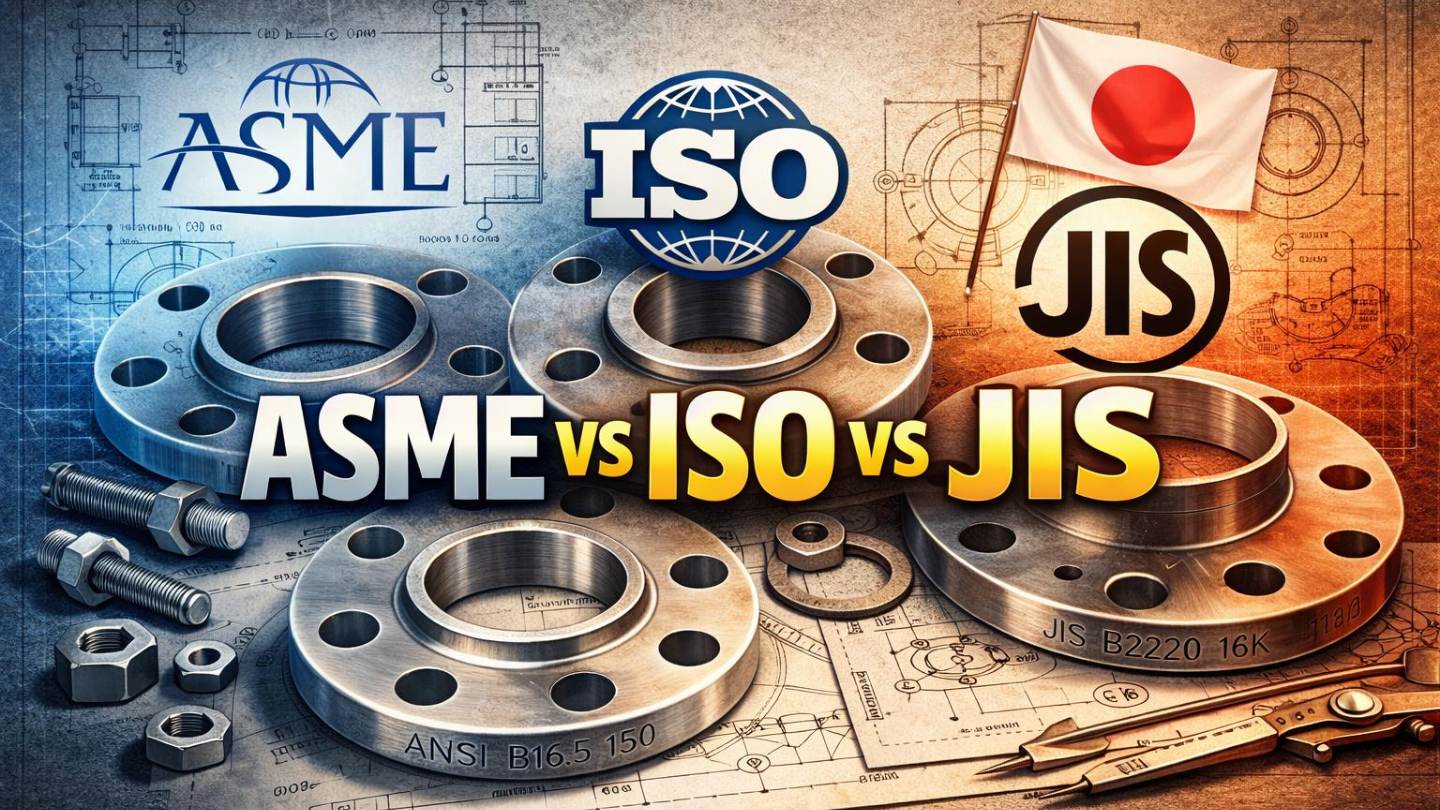
When working with industrial products like pipe fittings, valves, or piping systems, standards are what make everything fit, function, and perform safely. Three names you’ll often see in specifications are ASME, ISO, and JIS. While they are all important, they don’t mean the same thing.
This blog explains what are ASME and ISO standards, how ASME vs ISO differs in real use, and where JIS (Japanese Industrial Standards) fit into the picture – all in simple, practical terms.
What Are ASME and ISO Standards?
ASME (American Society of Mechanical Engineers) standards are mainly used for mechanical and pressure-related equipment. They define how components like pipes, fittings, and pressure vessels should be designed and tested to ensure safety and strength. ASME standards are widely used in the U.S. and in industries such as oil & gas, power, and heavy engineering.
ISO (International Organization for Standardization) standards are global. They focus on consistency across countries and industries. ISO covers quality systems, safety, documentation, and measurements, making it easier for companies around the world to work together.
ASME vs ISO: What’s the Difference?
When people compare ASME vs ISO or ISO vs ASME, they’re usually trying to understand how these standards are applied.
The key differences between ASME and ISO standards are:
- ASME is focused on product safety and mechanical performance
- ISO is focused on systems, processes, and global compatibility
- ASME standards often apply directly to physical components
- ISO standards often apply to how a company operates and measures quality
Because of this, many manufacturers follow both standards at the same time.
ISO Measurement Units Explained Simply
One important part of ISO vs ASME is measurement.
ISO measurement units use the metric system (meters, kilograms, pascals). This makes communication easier in international projects and reduces confusion caused by unit conversion.
ASME standards, especially older or U.S.-based ones, may still use inches or psi. In global projects, both systems are often used together.
ASME vs JIS: How Are They Different?
The comparison of ASME vs JIS becomes relevant when dealing with Japanese or Asia-Pacific markets.
JIS (Japanese Industrial Standards) are developed in Japan and are commonly used in Japanese manufacturing industries. JIS standards focus on precise dimensions, material specifications, and consistent manufacturing practices.
While ASME emphasizes pressure safety and strength, JIS standards are more focused on uniformity and manufacturing accuracy.
JIS vs ISO: Global vs Regional Use
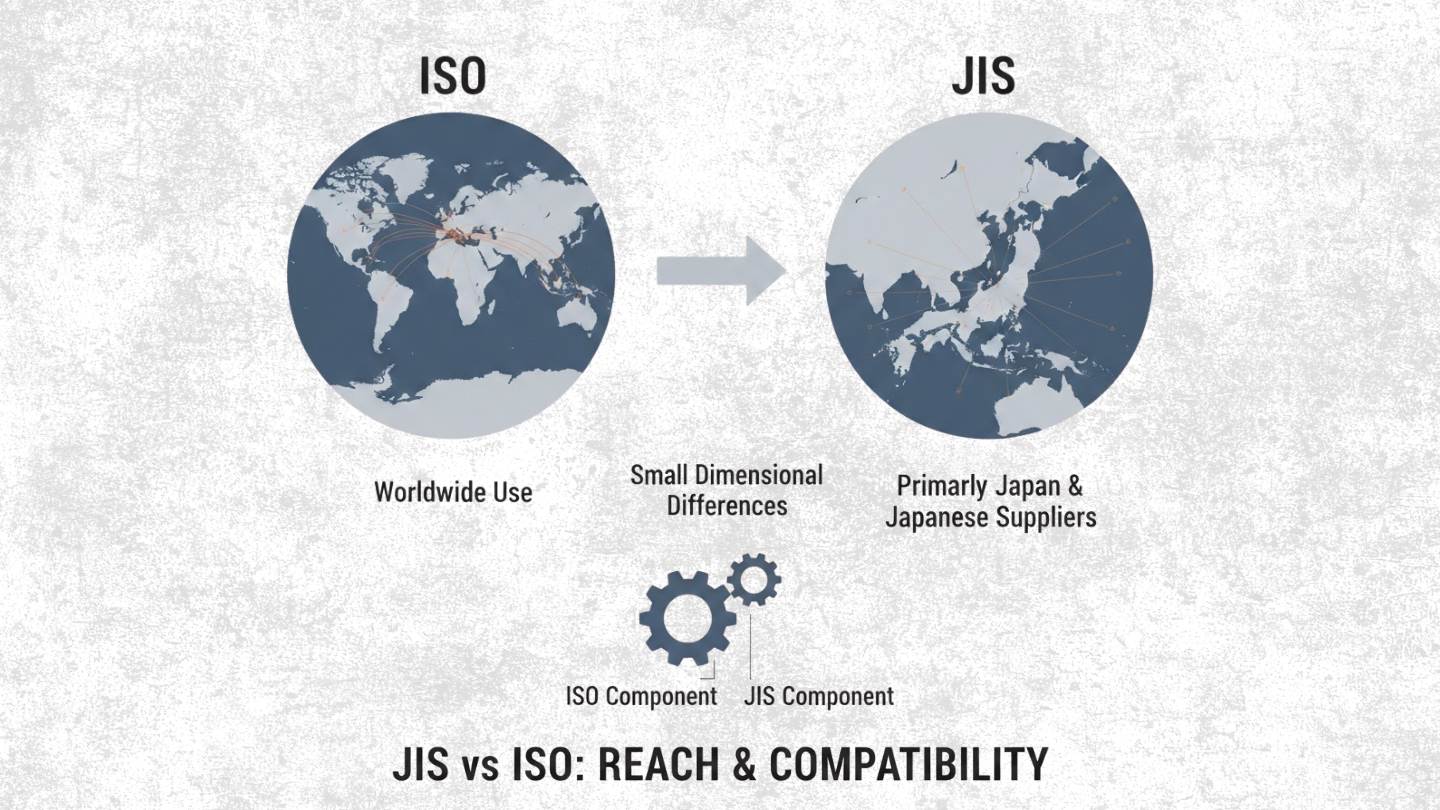
In JIS vs ISO, the difference is mainly about reach:
- ISO is designed for worldwide use
- JIS is primarily used in Japan and by Japanese suppliers
Some JIS standards are similar to ISO, but small dimensional differences can exist, which is important when sourcing components.
Difference Between ASME vs ISO vs JIS
To keep it simple:
- ASME ensures mechanical safety and performance
- ISO ensures global consistency and standard measurement systems
- JIS supports precision manufacturing based on Japanese standards
Each serves a different role, and many international projects require compliance with more than one standard.
Conclusion
Understanding ASME vs ISO, ISO vs ASME, and how ASME vs JIS and JIS vs ISO differ helps businesses make better sourcing and engineering decisions. These standards are not competitors – they work together to ensure safety, quality, and compatibility across global markets.
When sourcing components that must meet international requirements, working with a reliable pipe fittings manufacturer in India that understands ASME, ISO measurement units, and JIS specifications can make the entire process smoother, more cost-effective, and compliant with global expectations.