Skip to content
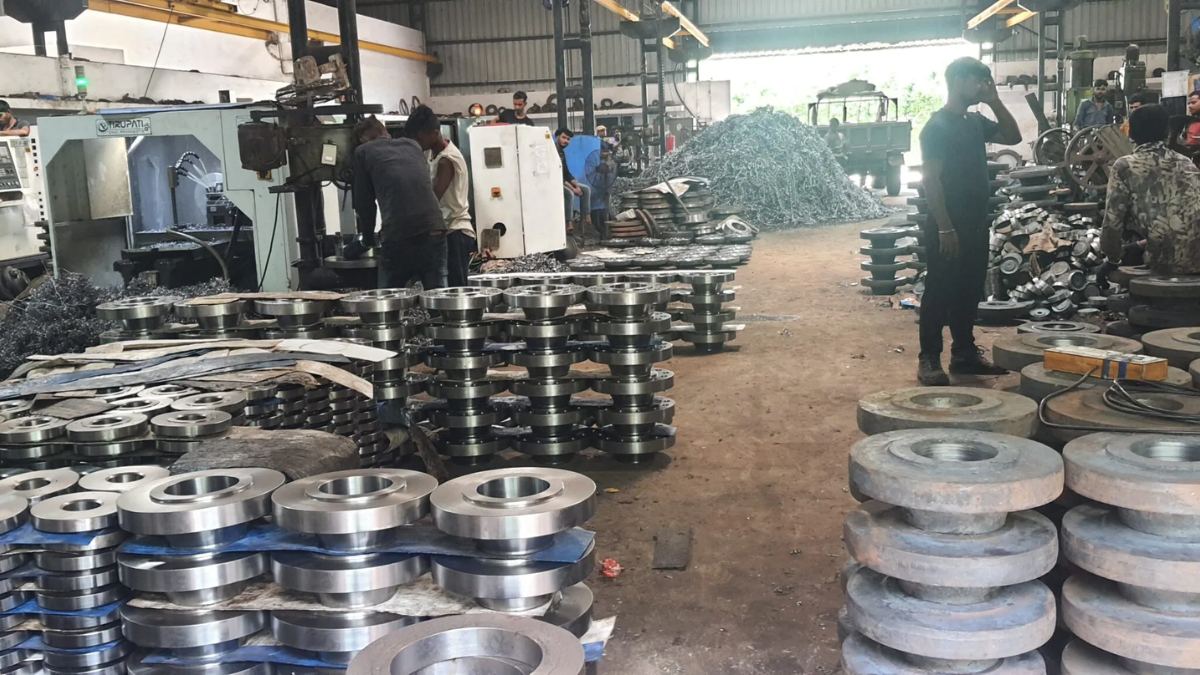
Flanges are one of the most essential yet often misunderstood components in piping and mechanical systems. Found across various industries, including oil & gas, power generation, water treatment, and manufacturing, flanges enable secure connections between pipes, valves, pumps, and other equipment.
In this guide, we explain what a flange is, its significance in piping, how flanges function, and the various types of piping flanges used in modern industrial systems.
What Is a Flange?
A flange is a mechanical component used to connect pipes, valves, fittings, or equipment by bolting them together with a gasket in between. This design creates a strong, leak-resistant joint while still allowing easy access for inspection, maintenance, or replacement.
In simple terms, when people ask “what does flanges mean”, it refers to a method of joining components that can be assembled and dismantled without cutting or welding the pipeline.
What Is a Pipe Flange Used For?
A pipe flange serves three primary purposes:
- To join pipe sections securely
- To allow controlled disassembly for maintenance
- To provide structural stability in high-pressure systems
Because flanges rely on bolting rather than permanent joints, they are widely used in systems that require flexibility, frequent inspection, or component replacement.
How Do Pipe Flanges Work?
Understanding how do pipe flanges work is straightforward:
- Two flanges are aligned at the pipe ends
- A gasket is placed between the flange faces
- Bolts are tightened uniformly around the flange circumference
- Compression creates a tight seal that prevents leakage
The effectiveness of a flange joint depends on factors such as flange type, gasket material, bolt torque, pressure rating, and surface finish.
Types of Piping Flanges
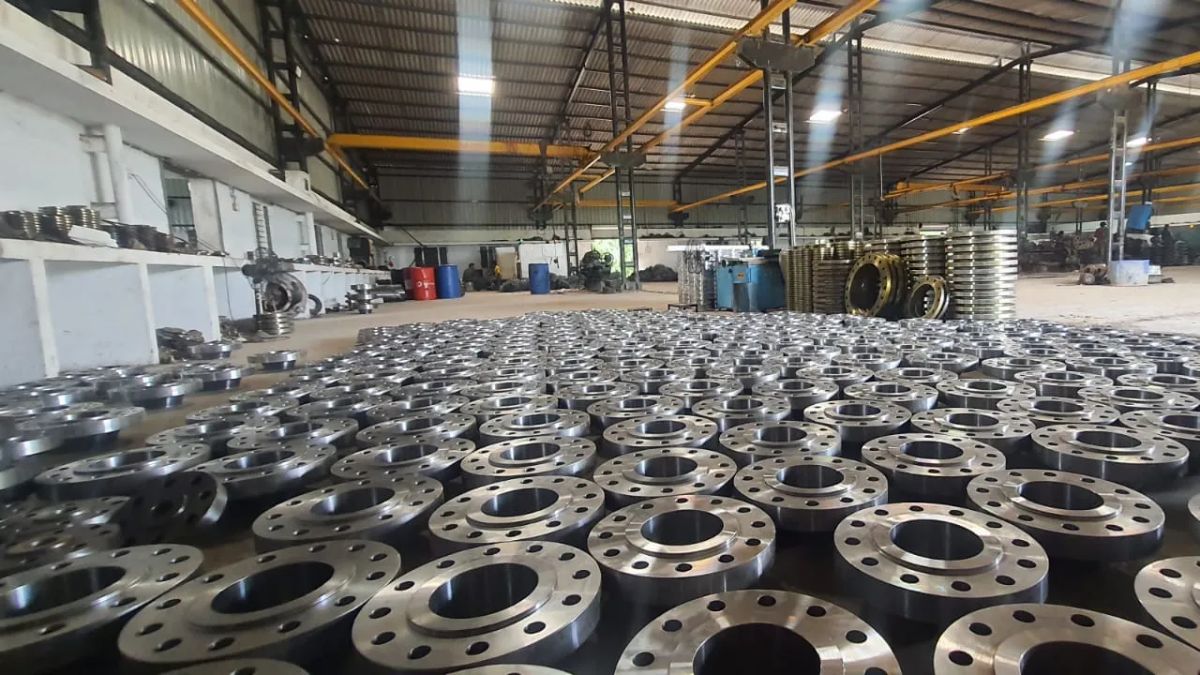
There are various types of flanges, each designed for specific pressure levels, installation methods, and service conditions. Below are the most commonly used different flange types in piping systems.
1. Weld Neck Flange
Weld neck flanges feature a long tapered hub that is welded directly to the pipe. This design helps distribute stress evenly, making it suitable for high-pressure and high-temperature applications.
Common applications:
Oil & gas pipelines, refineries, critical process lines
2. Slip-On Flange
Slip-on flanges slide over the pipe and are welded both inside and outside. They are easier to install and align, making them a cost-effective choice for low-pressure systems.
Common applications:
Water pipelines, cooling systems, and low-pressure services
3. Blind Flange
A blind flange is a solid disc used to close the end of a piping system. It allows future expansion or inspection without altering the existing pipeline.
Common applications:
Pipeline termination points, pressure testing sections
4. Socket Weld Flange
Socket weld flanges are designed for small-diameter pipes. The pipe fits into a recessed area and is welded, providing a smooth internal bore and a strong joint.
Common applications:
High-pressure lines with small pipe sizes
5. Threaded Flange
Threaded flanges connect to pipes using internal threads, eliminating the need for welding. These are ideal where welding is not feasible.
Common applications:
Hazardous areas, low-temperature services
6. Lap Joint Flange
Lap joint flanges are used with a stub end and allow the flange to rotate freely, simplifying bolt alignment. They are commonly chosen when frequent dismantling is required.
Common applications:
Systems requiring regular inspection or cleaning
7. Orifice Flange
Orifice flanges are used to measure the flow rate of liquids or gases. Installed in pairs with an orifice plate between them, they include pressure tap holes for accurate flow measurement.
Common applications:
Flow monitoring systems, oil & gas pipelines, process industries
8. Reducing Flange
Reducing flanges are used to connect pipes of different diameters. They combine the function of a reducer and a flange into a single component, helping save space and reduce joint count.
Common applications:
Pump connections, pipeline size transitions, compact piping layouts
9. Raised Face Flange
Raised face flanges have a small elevated surface around the bore that improves gasket compression and sealing performance. This is the most commonly used flange facing type.
Common applications:
Oil & gas, petrochemical plants, power generation units
10. Flat Face Flange
Flat face flanges feature a smooth, flat sealing surface across the entire face. They are typically used with full-face gaskets and are suitable for low-pressure systems.
Common applications:
Water treatment plants, utility lines, HVAC and fire protection systems
Choosing the Right Flange Type
Selecting the correct flange depends on several factors:
- Operating pressure and temperature
- Pipe size and material
- Maintenance frequency
- Installation environment
- Cost considerations
Using the wrong flange type can lead to leakage, reduced system efficiency, or premature failure.
Conclusion
Understanding what is a flange and the types of piping flanges is essential for designing reliable and maintainable piping systems. Each flange type offers specific advantages depending on application requirements, pressure conditions, and operational needs.
For projects requiring consistent quality, compliance with international standards, and long-term performance, sourcing from a trusted flanges manufacturer in India ensures dependable solutions for both domestic and global piping applications.