Skip to content
In industries where temperature control is critical, heat exchangers play a silent but essential role. From power plants and refineries to HVAC systems and food processing units, these systems ensure energy is transferred efficiently – without mixing fluids or wasting resources.
But what exactly is a heat exchanger, how do heat exchangers work, and why are they so widely used across industries? This guide breaks it down in simple terms.
Heat Exchanger Definition
A heat exchanger is a mechanical device designed to transfer heat from one fluid (liquid or gas) to another without allowing the two fluids to mix. The transfer occurs through a solid barrier, typically metal, which conducts heat efficiently.
In simple terms, the heat exchanger purpose is to either heat or cool a fluid by using another fluid at a different temperature.
This makes a heat exchanger system essential for:
- Temperature regulation
- Energy efficiency
- Process safety
- Cost reduction
What Is the Function of a Heat Exchanger?
The function of a heat exchanger is straightforward:
to move thermal energy from a hot medium to a colder one in a controlled and efficient manner.
Key functions of heat exchanger systems include:
- Cooling hot fluids before reuse or discharge
- Heating fluids for industrial or domestic processes
- Recovering waste heat to improve energy efficiency
- Maintaining optimal operating temperatures in machinery
In many industries, the heat exchanger function directly impacts productivity, safety, and operational costs.
How Heat Exchangers Work?
Understanding how heat exchangers work starts with one basic principle: heat always flows from a hotter substance to a colder one.
Heat Exchanger Working Principle
The heat exchanger’s working principle relies on three main modes of heat transfer:
- Conduction – heat transfer through the solid wall separating fluids
- Convection – heat transfer between fluid and surface
- Sometimes radiation – in high-temperature applications
When people ask “heat exchanger how it works”, the answer is simple:
- A hot fluid flows on one side
- A cold fluid flows on the other
- Heat transfers through the separating surface
- Fluids exit at adjusted temperatures
This working principle of heat exchanger systems allows precise temperature control without contamination.
Main Components of a Heat Exchanger
Understanding the components of heat exchanger systems helps explain their efficiency and reliability.
Common components include:
- Heat transfer surface – tubes or plates where heat exchange occurs
- Shell or frame – encloses the system
- Inlet and outlet nozzles – direct fluid flow
- Baffles – control fluid movement and improve heat transfer
- Gaskets or seals – prevent leakage
Each component is designed to withstand pressure, temperature, and corrosion depending on the application.
Types of Heat Exchangers
Different industrial needs require different designs. Below are the most widely used types.
1. Shell and Tube Heat Exchangers
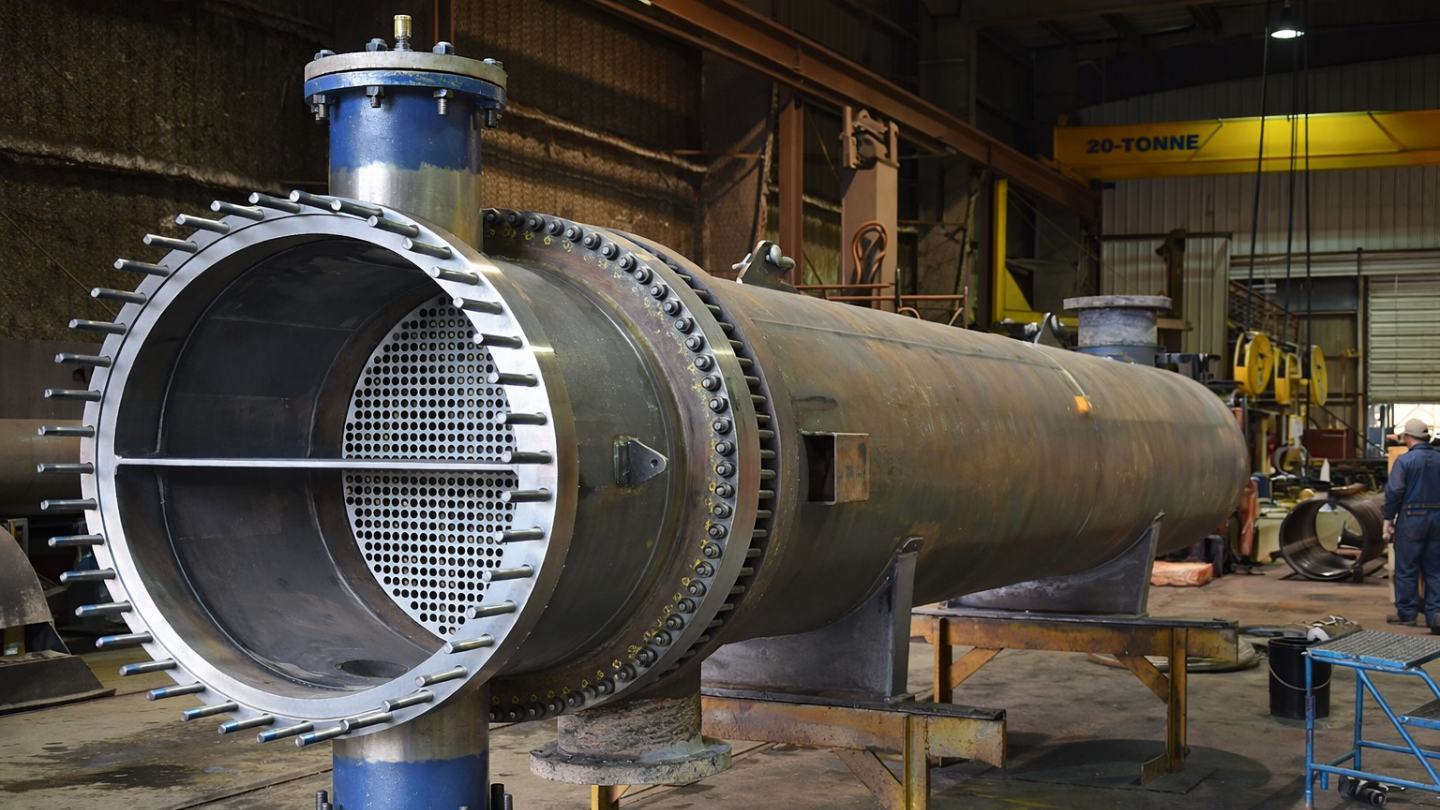
One of the most common designs, especially in oil & gas and chemical industries. Tubes carry one fluid, while the shell contains another.
Best for:
- High pressure and temperature applications
- Large-scale industrial processes
2. Plate Heat Exchangers
Consist of thin metal plates stacked together to allow efficient heat transfer.
Best for:
- Compact spaces
- HVAC, food, and pharmaceutical industries
3. Air-Cooled Heat Exchangers
Use air instead of water to cool fluids.
Best for:
- Areas with limited water availability
- Power plants and refineries
4. Double Pipe Heat Exchangers
A simple design where one pipe runs inside another.
Best for:
- Small-scale operations
- Low flow rate applications
Each type supports specific applications of heat exchanger systems based on process requirements.
Application of Heat Exchanger Systems

The application of heat exchanger technology spans almost every major industry.
Industrial Applications
- Oil & gas processing
- Chemical and petrochemical plants
- Power generation
- Steel and metal processing
Commercial & Domestic Applications
- HVAC systems
- Refrigeration and air conditioning
- Water heating systems
Specialized Applications
- Food and beverage processing
- Pharmaceuticals
- Marine and offshore systems
In all these cases, the heat exchanger purpose is to improve efficiency, reduce energy loss, and ensure process stability.
Why Heat Exchangers Are So Important?
A well-designed heat exchanger system offers:
- Lower energy consumption
- Reduced operational costs
- Improved system lifespan
- Better environmental performance
That’s why selecting the right design – and the right manufacturer—is critical.
Choosing the Right Heat Exchanger
When selecting a heat exchanger, consider:
- Operating temperature and pressure
- Type of fluids involved
- Space availability
- Maintenance requirements
- Compliance with international standards (ASME, TEMA, ISO)
An incorrectly selected unit can reduce efficiency and increase long-term costs.
Final Thoughts: Work With a Reliable Heat Exchanger Manufacturer
Understanding how heat exchangers work, their functions, and their applications helps businesses make informed decisions—but manufacturing quality matters just as much as design.
If you’re looking for a reliable heat exchangers manufacturer in India, it’s essential to partner with a company that offers:
- Precision engineering
- Material expertise
- Compliance with global standards
- Proven experience across industries
A trusted manufacturer ensures not only efficient heat transfer, but long-term performance, safety, and value for your operations.