Skip to content

Offshore piping systems operate in demanding environments where seawater, salt-laden air, humidity, pressure, temperature variations, and difficult maintenance conditions can affect piping components over time. Because corrosion and mechanical reliability are major concerns offshore, material selection plays an important role in the performance and service life of piping connections.
Flanges are used to connect pipes, valves, pumps, vessels, and other equipment while allowing components to be assembled, inspected, maintained, or replaced. In an offshore installation, a flange failure can result in leakage, maintenance delays, production interruptions, and difficult repair work.
This is why duplex stainless steel is widely considered for applications where both corrosion resistance and mechanical strength are important.
Duplex stainless steels combine austenitic and ferritic microstructures, giving them a useful balance of properties compared with many conventional stainless-steel grades. However, not every duplex grade is suitable for every offshore environment. The correct material depends on factors such as seawater exposure, temperature, pressure, chloride concentration, process conditions, and project specifications.
In this article, we explain the benefits and uses of duplex flanges for offshore applications and what to consider when selecting them.
What Are Duplex Steel Flanges?
Duplex steel flanges are piping flanges manufactured from duplex stainless steel and used to create bolted connections between pipes, valves, fittings, pumps, and other equipment.
The duplex structure consists primarily of ferrite and austenite phases. This combination provides high mechanical strength along with good corrosion resistance, making duplex stainless steel suitable for various demanding industrial and marine applications.
Common duplex flange materials include grades such as UNS S31803 and 2205, while more demanding environments may require super duplex grades such as UNS S32750. KAFCO Asia lists both duplex and super duplex grades among its available flange materials.
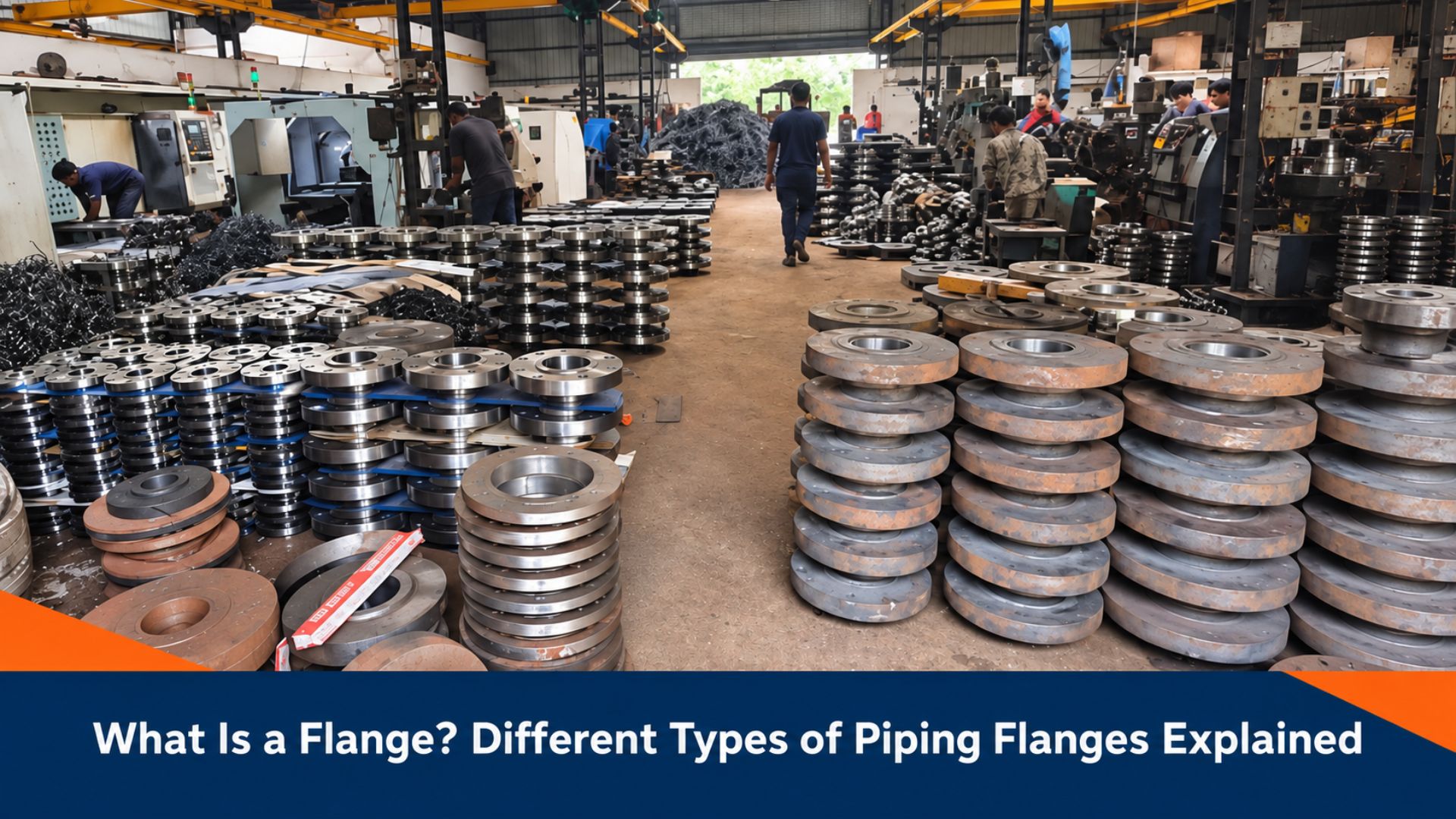
The flange type itself may vary depending on the piping design and application, including weld neck, slip-on, blind, socket weld, threaded, reducing, and other configurations.
For a broader understanding of flange types and their applications, see our guide to flange types.
Why Are Duplex Flanges Used Offshore?
Offshore environments expose piping components to chloride-rich marine conditions. Salt spray, seawater, moisture, and process fluids can increase the risk of corrosion, particularly when materials are not appropriately selected.
One of the main reasons duplex stainless steel is considered for offshore applications is its combination of corrosion resistance and mechanical strength.
The material can provide better resistance to several forms of corrosion than some conventional stainless-steel options while also offering higher strength than many common austenitic grades.
This combination is particularly useful where the piping system must withstand both corrosive exposure and mechanical loads.
Benefits of Duplex Flanges
1. High Corrosion Resistance
One of the primary benefits of duplex flanges is their resistance to corrosion.
Duplex stainless steels contain chromium, while many grades also contain molybdenum and nitrogen. These alloying elements contribute to resistance against localized corrosion such as pitting and crevice corrosion.
This is particularly relevant in offshore environments where chloride exposure is difficult to avoid.
However, corrosion resistance depends on the specific grade. Standard duplex and super duplex should not be treated as interchangeable materials.
2. High Mechanical Strength
Duplex stainless steels offer high strength, which is one of their major advantages in demanding piping applications.
For flange connections, mechanical strength is important because the flange must withstand internal pressure, bolt loads, piping forces, and other operating stresses.
The combination of strength and corrosion resistance can make duplex an attractive option where both properties are required.
3. Better Resistance to Chloride Environments
Offshore installations are frequently exposed to chlorides from seawater and marine atmospheres.
Duplex stainless steel can provide good resistance to chloride-related corrosion, while super duplex grades can offer higher resistance where conditions are more aggressive.
This makes grade selection particularly important for applications involving direct or prolonged seawater exposure.
4. Resistance to Stress Corrosion Cracking
Chloride-containing environments can create conditions that increase the risk of stress corrosion cracking in susceptible materials.
Duplex stainless steels generally offer useful resistance to chloride stress corrosion cracking compared with many conventional austenitic stainless steels.
The actual suitability still depends on temperature, stress, environment, and the selected grade.
5. Potential Lifecycle Benefits
The initial cost of duplex material may be higher than some conventional alternatives. However, offshore projects should consider the total lifecycle cost rather than only the purchase price.
Corrosion-related maintenance can be expensive when equipment is located offshore. Access restrictions, specialist labour, shutdown requirements, and transportation can make even a relatively small component difficult to replace.
Selecting a suitable corrosion-resistant material can therefore support longer service life and reduce corrosion-related maintenance requirements.
Are Duplex Flanges Suitable for Seawater?

The answer depends on the grade and the specific seawater service.
Duplex stainless steels can perform well in many chloride-containing environments, but standard duplex should not automatically be specified for every direct seawater application.
For more demanding seawater conditions, super duplex grades may be considered because they offer higher resistance to localized corrosion.
Therefore, instead of asking whether duplex flanges are suitable for seawater in general, it is more useful to ask:
Which duplex grade is suitable for the specific seawater application?
Temperature, chloride concentration, flow conditions, exposure time, crevice conditions, and mechanical loading should all be considered before selecting the material.
Are Duplex Flanges Better Than Stainless Steel Flanges?
Duplex flanges are themselves stainless-steel flanges, so the comparison is usually between duplex stainless steel and other stainless-steel families such as 304, 316, or higher-alloyed grades.
Duplex can offer an attractive combination of strength and corrosion resistance, but it is not automatically the best option for every application.
For moderate marine or industrial environments, austenitic grades such as 316L may be appropriate. More aggressive chloride or seawater conditions may justify duplex, super duplex, or other higher-alloy materials.
The selection should consider:
- Process medium
- Chloride exposure
- Temperature
- Pressure
- Mechanical loading
- Corrosion requirements
- Applicable standards
- Welding requirements
- Project specifications
- Lifecycle cost
Selecting Duplex Flanges for Offshore Applications
Choosing the correct flange involves more than selecting a duplex grade.
The flange type, dimensions, pressure class, facing, material grade, connection method, and applicable manufacturing standard all need to match the piping system.
For offshore projects, the corrosion environment should also be clearly understood. A flange exposed to marine atmosphere may have different requirements from one in continuous seawater service.
Material compatibility is equally important. Selecting a highly corrosion-resistant material does not compensate for an incorrect pressure rating, unsuitable design, or poor installation.
Conclusion
Duplex flanges for offshore applications provide a useful combination of corrosion resistance and mechanical strength, making them suitable for many demanding marine and offshore piping systems.
However, duplex is not automatically the best flange material for every offshore application. Standard duplex, super duplex, and other stainless-steel grades have different performance characteristics, so the material should be selected according to the actual seawater exposure, process conditions, pressure, temperature, and project requirements.
At KAFCO Asia, we help customers select industrial flanges according to material specifications, dimensions, pressure classes, connection requirements, and application conditions.
Looking for a reliable flanges manufacturer in India for duplex, super duplex, or other industrial flange requirements? Contact us with your flange type, size, material grade, pressure class, applicable standard, and application details. We can help you identify a suitable flange specification for your offshore or industrial piping project and provide a quotation.
Frequently Asked Questions
What is the difference between duplex and super duplex flanges?
Super duplex grades generally contain higher alloy levels and provide greater resistance to localised corrosion than standard duplex grades. They are often considered for more demanding chloride and seawater environments.
Do duplex flanges require special maintenance?
Duplex stainless steel can reduce corrosion-related maintenance when correctly specified, but regular inspection is still important. Flange connections should be checked for leakage, corrosion, mechanical damage, and other service-related issues.
How do I choose the right duplex flange grade?
Consider the process medium, seawater or chloride exposure, operating temperature, pressure, mechanical loads, applicable standards, and project specifications. For demanding environments, the requirements may justify super duplex rather than standard duplex.