Skip to content

When specifying steel pipe for an industrial project, the manufacturing method can affect how the product is used, tested, and specified. Two terms that frequently appear in procurement documents are ERW and seamless.
So, what does ERW stand for in pipe, and how does an ERW pipe compare with a seamless pipe? The answer begins with how each pipe is manufactured. ERW pipe is formed from steel strip and joined along a longitudinal seam using electrical resistance, while seamless pipe is produced from a solid billet without a welded seam.
Understanding these differences is important when comparing pressure requirements, dimensions, material standards, cost, and intended service.
What Does ERW Stand for in Pipe?
ERW stands for Electric Resistance Welded. ERW pipe is manufactured by forming flat steel strip or coil into a cylindrical shape and joining the edges through electric resistance heating and pressure. The process creates a longitudinal weld seam without the addition of conventional filler metal.
Modern ERW production commonly uses high-frequency electrical currents to produce the weld. Improvements in welding and inspection technology have significantly advanced the consistency and reliability of ERW pipe compared with older low-frequency processes.
The term ERW therefore describes the manufacturing process, rather than a particular steel grade. The applicable material grade, dimensions, testing requirements, and service conditions still need to be specified separately.
What Is a Seamless Pipe?
A seamless pipe is produced without a longitudinal welded joint. Manufacturing generally starts with a solid round steel billet. The billet is heated and pierced through its centre, after which rolling, elongation, or drawing processes bring the hollow section to the required dimensions.
Because the pipe is formed from a solid billet rather than joining the edges of a strip, there is no original weld seam running along the pipe body.
This manufacturing route is commonly associated with applications where the project specification calls for seamless construction, particularly demanding pressure and temperature conditions. However, whether seamless pipe is required should always be determined by the applicable material specification, design code, and service conditions rather than by assuming that seamless is automatically necessary.
ERW Pipe vs Seamless Pipe: How Are They Different?
The most fundamental difference in an ERW pipe vs seamless pipe comparison is the manufacturing route.
| Feature | ERW Pipe | Seamless Pipe |
| Manufacturing | Formed from steel strip or coil and electrically welded | Pierced and formed from a solid billet |
| Longitudinal weld | Present | None |
| Production route | Electric resistance welding | Piercing, rolling, drawing or related processes |
| Typical consideration | Efficient production and dimensional consistency | Seam-free construction and demanding service requirements |
| Selection factors | Specification, pressure, temperature, size and application | Specification, pressure, temperature, size and application |
ASME B36.10 covers dimensions of both welded and seamless wrought steel pipe for high- and low-temperature and pressure applications. This illustrates an important point: welded and seamless pipe are both established engineering products, and selection depends on the applicable requirements rather than a simple “one is better” rule.
Seamless vs Welded: Does One Always Perform Better?
The seamless vs welded discussion is often simplified into “seamless is stronger,” but that is not an adequate basis for engineering selection.
Modern welded pipe can provide reliable performance when manufactured and tested according to the applicable product specification. The quality of the weld, material grade, wall thickness, inspection requirements, design pressure, temperature, corrosion environment, and applicable code all influence suitability.
For some demanding services, project specifications may require seamless pipe. For other systems, welded pipe can meet the requirements and provide a more practical manufacturing route.
The correct question is therefore not simply which pipe is stronger. It is which manufacturing method meets the specified service requirements.
Cost and Availability
Cost is another practical difference between welded and seamless products.
ERW pipe is generally efficient to manufacture because it starts from flat steel strip or coil rather than a solid billet. This can make welded pipe more economical for applications where the applicable specification allows it. Seamless production involves additional billet processing and forming operations, which can increase manufacturing complexity and cost.
Availability also depends heavily on pipe size, material, wall thickness, grade, standard, and market conditions. Larger-diameter requirements may favour welded manufacturing routes, while certain smaller, heavy-wall, high-pressure, or specialised requirements may call for seamless products.
For procurement teams, comparing the two options should therefore include material specification, dimensions, testing, delivery requirements, and total project suitability, not just unit price.
ERW vs Seamless Pipe: Which Applications Use Them?
Both ERW and seamless pipes have extensive industrial applications.
ERW pipe can be used for applications such as:
- Water and utility piping
- General industrial fluid transportation
- Structural applications
- Oil and gas systems where permitted by specification
- Mechanical and fabrication applications
Seamless pipe is commonly associated with:
- High-pressure piping
- High-temperature service
- Boiler and process applications
- Oil and gas applications
- Petrochemical systems
- Other applications where the governing specification requires seamless construction
The exact application range depends on the material grade, product standard, dimensions, testing, and project requirements.
Standards Matter When Selecting ERW or Seamless Pipe
Standards should be checked before finalizing a purchase because the same general material family can have different manufacturing requirements under different specifications.
For example, American Piping Products notes that ASTM A106 requires seamless pipe, while ASTM A53 permits either welded or seamless pipe depending on the product requirements.
Dimensions are also standardized. ASME B36.10 covers welded and seamless wrought steel pipe dimensions, while other standards address specific materials, products, and applications.
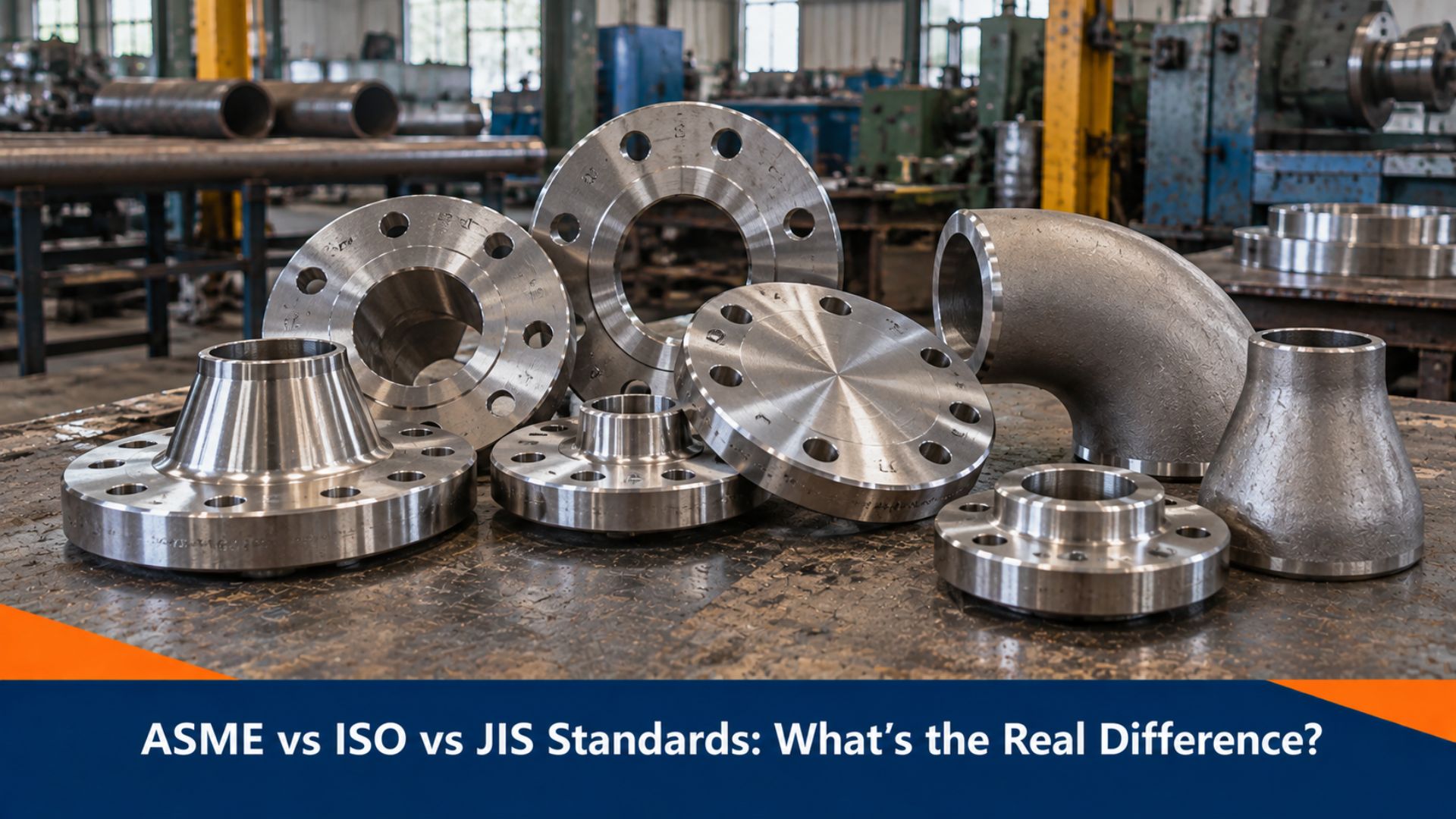
Understanding ASME, ISO, and JIS standards can therefore help engineers and procurement teams interpret specifications correctly when selecting piping materials.
What Should Buyers Check Before Ordering?
Before choosing between ERW and seamless pipe, review:
- Material grade and specification
- Pipe size and outside diameter
- Wall thickness or schedule
- Design pressure and operating temperature
- Service medium and operating environment
- Applicable design and product standards
- Required inspection and testing
- Heat treatment requirements
- Traceability and material documentation
- Project-specific client or EPC requirements
These details help prevent a common procurement problem: selecting a pipe based on a general product description without confirming whether its manufacturing method and specification actually satisfy the project.
Conclusion
ERW means Electric Resistance Welded, describing a pipe manufactured by forming steel strip and electrically welding its longitudinal edges. Seamless pipe, by contrast, is produced from a solid billet without a welded seam.
The choice between them depends on the complete engineering requirement—material, dimensions, pressure, temperature, service conditions, applicable standards, testing, and project specifications.
For industrial piping requirements, pipe fittings manufacturers in India and experienced piping suppliers can help evaluate the required product specification and supporting documentation. If you have a specific pipe requirement, send an enquiry to discuss the appropriate piping solution.
Frequently Asked Questions.
Is ERW pipe suitable for pressure applications?
Yes. ERW pipe can be used for pressure service when the applicable product standard, grade, dimensions, testing, and design requirements permit it.
Does ERW pipe have a visible weld seam?
The longitudinal seam may be difficult to see or feel on finished modern ERW pipe because the weld area is processed during manufacturing.
Is seamless pipe always more expensive than ERW pipe?
Seamless pipe generally involves a more complex manufacturing route and is often more expensive, but actual pricing depends on grade, dimensions, quantity, availability, and market conditions.
Can the same steel grade be available as both ERW and seamless?
In some specifications, yes. However, the applicable product standard may restrict the permitted manufacturing method. ASTM A53, for example, can cover both welded and seamless pipe, while ASTM A106 is seamless.
What information should be included in a pipe enquiry?
A useful enquiry should identify the material grade, applicable standard, pipe size, wall thickness or schedule, quantity, manufacturing type, testing requirements, and service conditions where relevant.